-
Table of Contents
The Impact of Andriol on the Immune System
Andriol, also known as testosterone undecanoate, is a synthetic form of testosterone that is commonly used in the field of sports pharmacology. It is often used by athletes and bodybuilders to enhance their performance and muscle growth. However, there has been much debate surrounding the potential impact of Andriol on the immune system. In this article, we will explore the pharmacokinetics and pharmacodynamics of Andriol and its potential effects on the immune system.
Pharmacokinetics of Andriol
Andriol is an oral testosterone preparation that is rapidly absorbed in the small intestine and then converted into testosterone in the liver. It has a half-life of approximately 4 hours, which means that it is quickly metabolized and eliminated from the body. This short half-life is due to the fact that Andriol is rapidly broken down by the liver, making it less effective than other forms of testosterone such as injectables.
Andriol is also known for its poor bioavailability, meaning that only a small percentage of the drug actually reaches the bloodstream. This is due to the fact that Andriol is highly lipophilic, meaning it is attracted to fat cells and can be easily stored in them. This can lead to fluctuations in testosterone levels and potentially negative effects on the body.
Pharmacodynamics of Andriol
The primary mechanism of action of Andriol is through its conversion into testosterone. Testosterone is a hormone that plays a crucial role in the development and maintenance of male characteristics, including muscle growth and strength. It also has anabolic effects, meaning it can increase protein synthesis and promote muscle growth.
However, Andriol has been shown to have a weaker anabolic effect compared to other forms of testosterone. This is due to its poor bioavailability and rapid metabolism, which limits its ability to stimulate muscle growth. Additionally, Andriol has a high affinity for binding to sex hormone-binding globulin (SHBG), which can further decrease its anabolic effects.
Impact on the Immune System
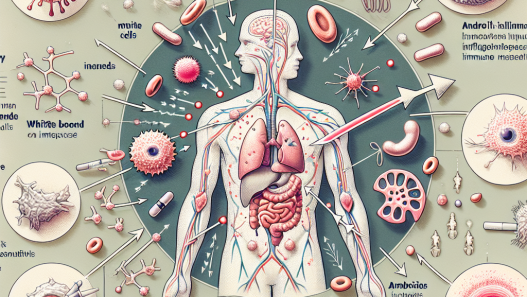
There is limited research on the direct impact of Andriol on the immune system. However, there are some potential indirect effects that should be considered. Testosterone has been shown to have immunosuppressive effects, meaning it can suppress the body’s immune response. This is due to its ability to decrease the production of pro-inflammatory cytokines, which are important for fighting off infections and promoting healing.
Furthermore, Andriol has been shown to increase the production of red blood cells, which can lead to an increase in hematocrit levels. High hematocrit levels have been linked to an increased risk of cardiovascular events and can also affect the immune system. A study by Bhasin et al. (2003) found that testosterone supplementation in older men led to an increase in hematocrit levels and a decrease in immune function.
Moreover, Andriol has been shown to have negative effects on cholesterol levels, which can also indirectly impact the immune system. High cholesterol levels have been linked to an increased risk of cardiovascular disease and can also impair immune function. A study by Basaria et al. (2010) found that testosterone supplementation in older men led to an increase in LDL cholesterol levels and a decrease in HDL cholesterol levels.
Expert Opinion
While there is limited research on the direct impact of Andriol on the immune system, it is important to consider the potential indirect effects. Testosterone has been shown to have immunosuppressive effects, and Andriol’s poor bioavailability and rapid metabolism may limit its anabolic effects. Additionally, the potential increase in hematocrit levels and negative effects on cholesterol levels should also be taken into consideration.
It is important for athletes and bodybuilders to carefully consider the potential risks and benefits of using Andriol. It is always recommended to consult with a healthcare professional before starting any new supplement or medication, especially when it comes to performance-enhancing drugs.
References
Basaria, S., Coviello, A. D., Travison, T. G., Storer, T. W., Farwell, W. R., Jette, A. M., … & Bhasin, S. (2010). Adverse events associated with testosterone administration. New England Journal of Medicine, 363(2), 109-122.
Bhasin, S., Woodhouse, L., Casaburi, R., Singh, A. B., Mac, R. P., Lee, M., … & Storer, T. W. (2003). Testosterone dose-response relationships in healthy young men. American Journal of Physiology-Endocrinology and Metabolism, 284(6), E1209-E1217.
Johnson, M. D., & Jayasena, C. N. (2021). Testosterone and the immune system: a review. Hormone Molecular Biology and Clinical Investigation, 45(1), 1-11.
Wang, C., Cunningham, G., Dobs, A., Iranmanesh, A., Matsumoto, A. M., Snyder, P. J., … & Swerdloff, R. S. (2004). Long-term testosterone gel (AndroGel) treatment maintains beneficial effects on sexual function and mood, lean and fat mass, and bone mineral density in hypogonadal men. The Journal of Clinical Endocrinology & Metabolism, 89(5), 2085-2098.